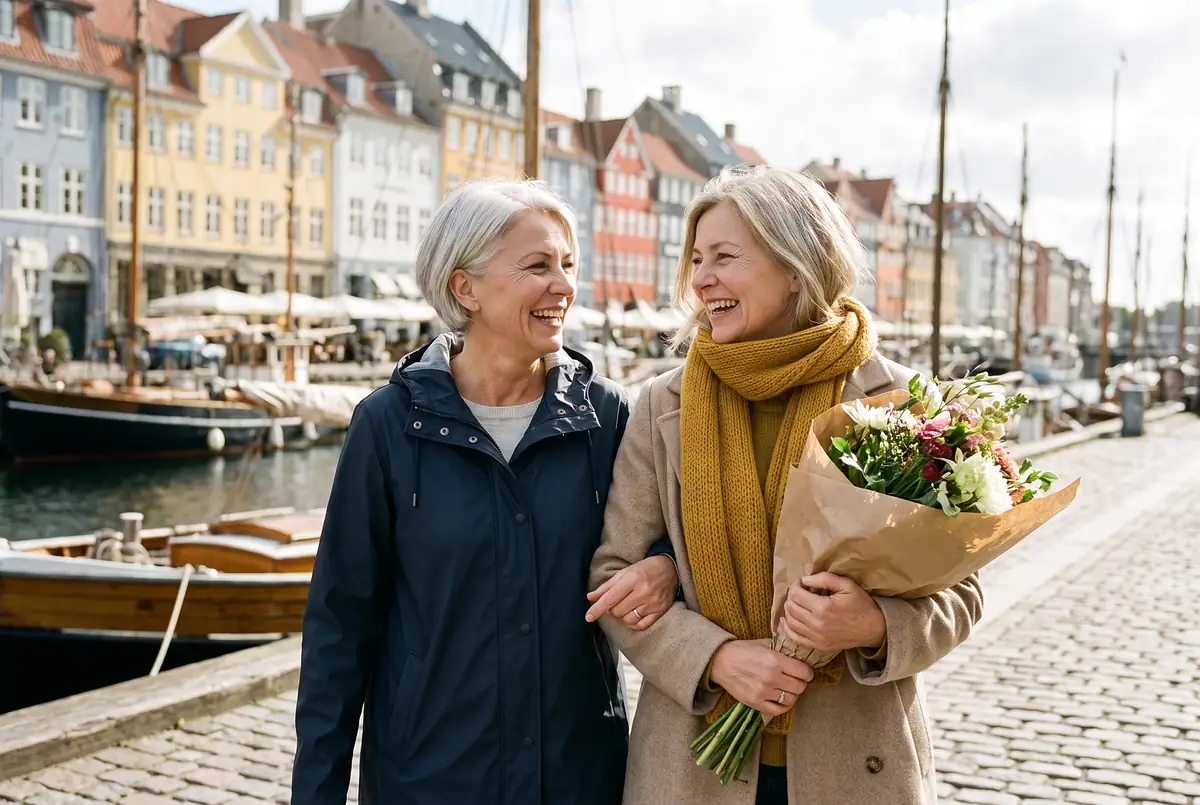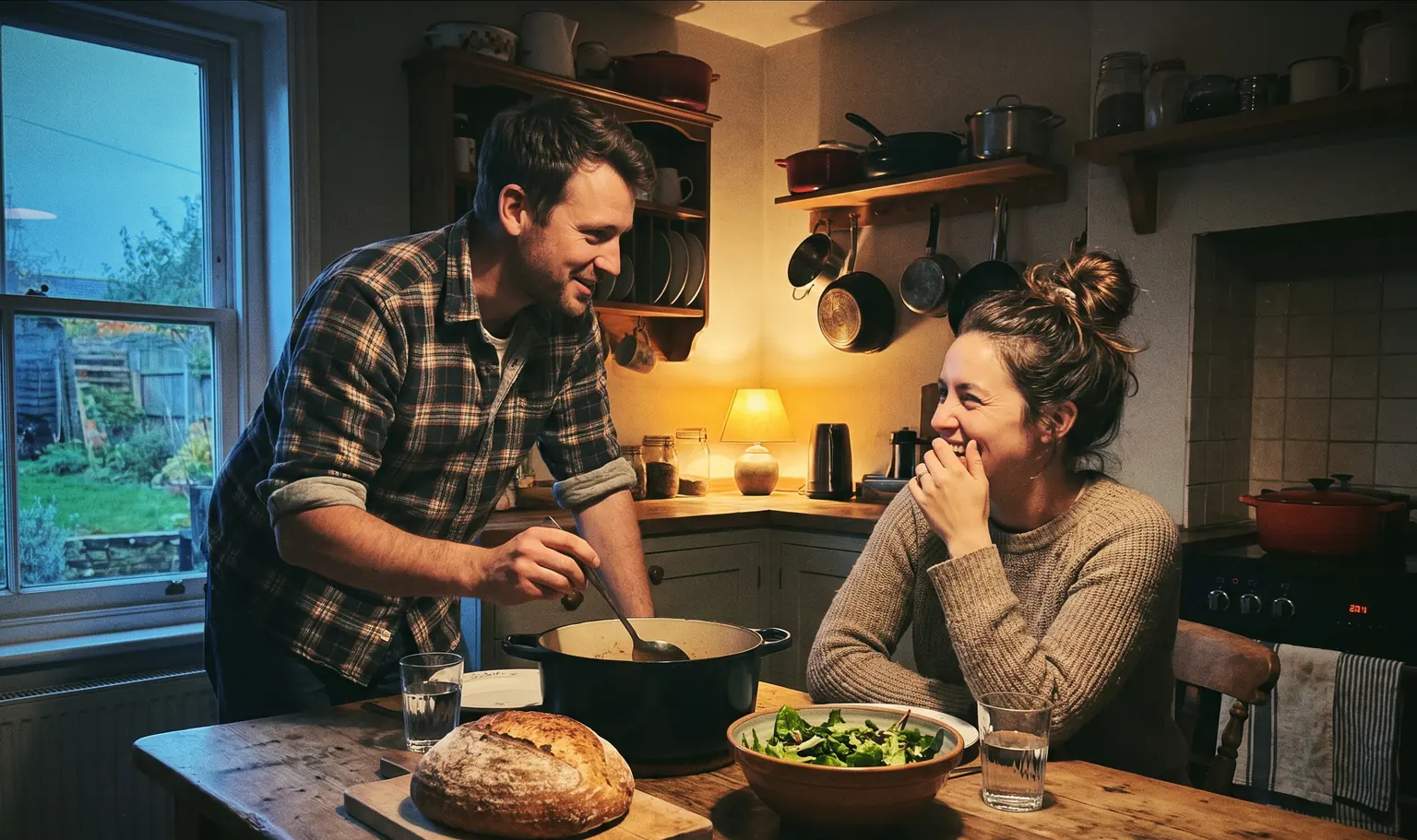
The best dinner for a new guest is one you finished before they rang the bell. Cook the main course the day before, make a dessert that waits in the fridge, put out something to share that needs no cooking at all, and keep one small, easy task for the evening itself, so your hands have something to do. Then spend the night at the table, not at the stove.
First, the invitation
Ask someone home once you’ve met somewhere public, and once you both want to. That is our safety advice for any first meeting, and it holds here: a dinner at home is for the second or third evening, not the first. If it is your first time alone together, it’s sensible to tell a friend your plans, as you would for any date.
When you invite, ask two questions. Is there anything they don’t eat? And is there anything they don’t drink? The answers change the menu, and asking shows you were already thinking about them.
Agree a time to arrive, and say something about the evening: “nothing fancy, I’ll cook” sets the tone better than a menu. Most of what makes a calmer first date work, a clear plan and a natural end, works at home too.
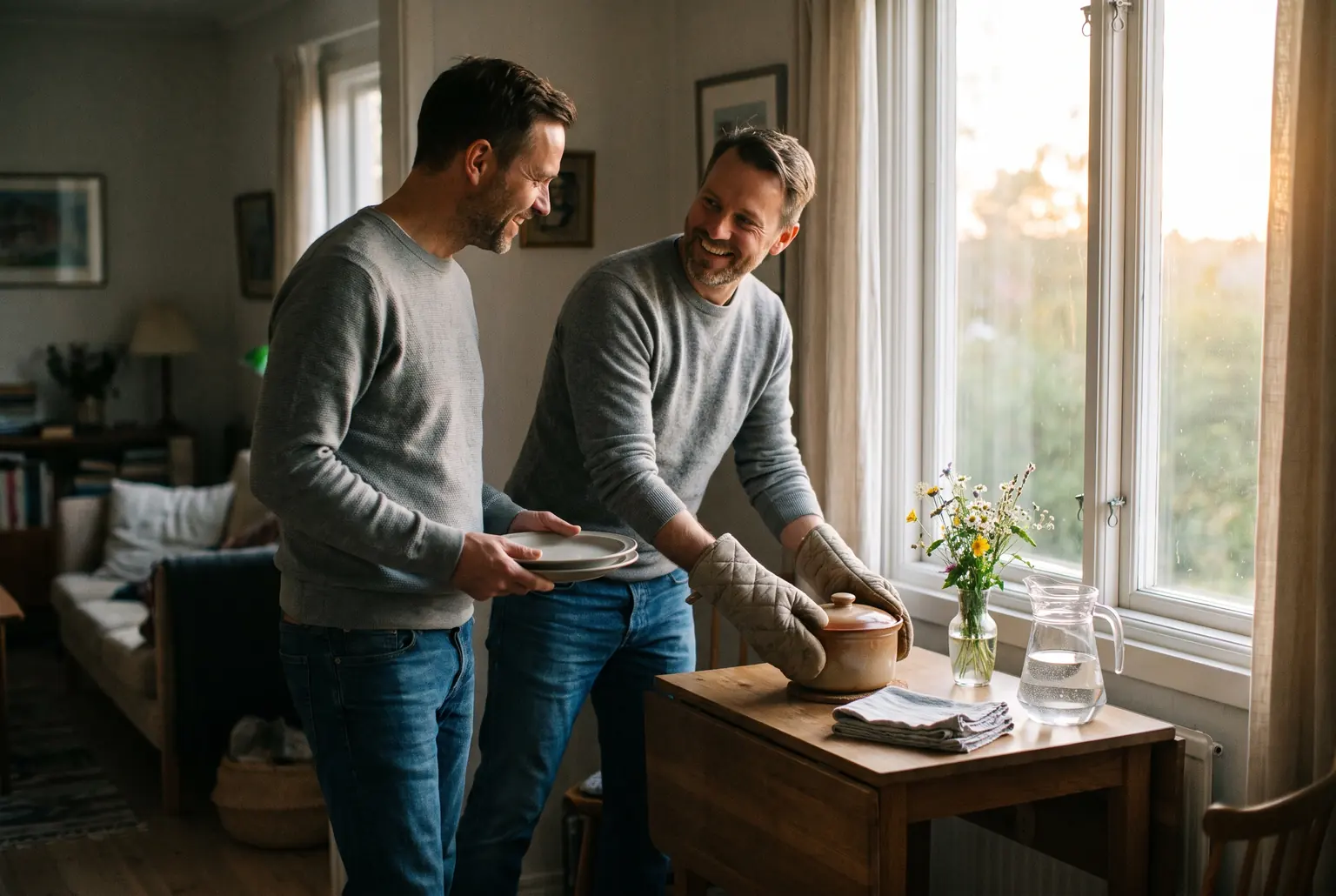
A menu that waits for you
Four parts, each chosen because it asks nothing of you at eight o’clock.
Something to share while you talk
Good bread, olive oil, a cheese you like, some fruit, olives. Put it out before they arrive. It gives both of you something to do with your hands in the first awkward minutes, and it means nobody arrives to a cook with their back turned.
A main course that holds
Braises and stews are made for this. They hold well overnight, and many cooks find they taste better the next day; the reasons are debated, from flavours evening out as the dish rests to gelatin setting and melting again (America’s Test Kitchen; BBC Science Focus). Either way, the work is done the day before, and on the night you only warm it.
Choose something you have cooked before. Chicken braised with white wine and leeks, beef or mushrooms in red wine, a lentil and vegetable stew if either of you doesn’t eat meat. Bring it to the table in its pot.
Something fresh, at the last minute
A green salad, dressed at the table. It is the one thing you make in front of them, it takes a minute, and it gives the meal something bright beside the slow-cooked main.
A dessert from the fridge
Make it the night before: a chocolate mousse, a panna cotta, pears poached in wine or tea. Nothing that needs the oven on while you’re trying to listen.
Something to drink, for both of you
If you’re pouring wine, have something without alcohol that you’d happily choose yourself, not a can of whatever was in the cupboard. Some people don’t drink, some don’t on a date, and nobody should have to explain which.
The plan
그날 저녁, 시간별로
- The day beforeCook the main course, let it cool, and put it in the fridge in its pot. Make the dessert.
- That morningBuy the bread, the salad leaves and anything else that should be fresh. Chill what needs chilling.
- Two hours beforeClear the kitchen and the table. Set two places at one corner. Choose the music.
- One hour beforePut the main course on a low heat with the lid on. Wash and dry the leaves. Make the dressing.
- When they arrivePour something to drink, put the plate to share between you, and sit down. The kitchen can wait twenty minutes.
- At the tableBring the main course to the table in its pot. Dress the salad there, together.
- LaterDessert straight from the fridge. Leave the dishes for tomorrow.
The room
You are setting a scene for a conversation, not for a photograph.
- Light. One or two lamps instead of the ceiling light. Candles if you like them, away from anything that can catch.
- Music. Low, and long enough that nobody has to choose the next song.
- Where to sit. At one corner of the table, not across the whole width of it. Close enough to talk, with room to look away.
- Phones. Away, both of them.
- The kitchen. Clear it before they arrive, so the dishes can wait until tomorrow without looking at you.
The best dinner for a new guest is one you finished before they rang the bell.
At the table
Let the conversation lead. Don’t narrate the cooking, and don’t apologise for it. If something went wrong, say so once and laugh; it’s a better story than a perfect dish.
Ask about them, and answer what they ask you. If you’ve only just met, Lisbon, for Two has a thought that applies here too: plan the day, not the night. A dinner at home is a chance to be the person you are on an ordinary evening, which is the person they will actually be spending evenings with.
When they offer to help
They will, and it’s a kind thing to do. Have a real job ready, not a polite refusal: open the bottle, slice the bread, dress the salad, carry the pot. Cooking side by side for five minutes does more for an evening than a course served perfectly to someone sitting alone at the table.
Cooking around what they don’t eat
If they told you they don’t eat meat, or gluten, or anything else, cook a main course everyone eats, rather than a main for you and a side for them. A lentil stew, a mushroom braise or a big pot of beans with herbs and good bread is a whole dinner, not a compromise. Don’t make a speech about it. The care shows in the food.
If a guest has an allergy, ask what it means in practice, and keep the menu simple enough that you know every ingredient in it.
When you’re the guest
Ask what you can bring, and bring it even if they say nothing. A dessert you made, something good to drink, or flowers already in a jar, so nobody has to find a vase. Arrive on time, offer to help once, and mean it. The next day, the same short message works in both directions.
Ending the evening well
Let the evening end when it ends. Offer to call them a car or walk them to it. If one of you wants the night to go on and the other doesn’t, the one who wants less wins, kindly and without a discussion. Nobody owes anybody anything for a dinner.
The next day, send a short message. Not a review of the evening: one true sentence about something they said.
If you’re not at the stage of inviting anyone yet, the Pulse is a quiet place to start: a short questionnaire that draws a portrait of you.